Understanding the Epoxy Garage Flooring Installation Process in Frisco
Many homeowners in Frisco want epoxy garage flooring but hesitate because they do not fully understand the installation process. That hesitation makes sense. A quality epoxy floor is not just about how it looks on day one. It is about how it performs years later.
A professional installation follows a precise, step-by-step system. Skipping or rushing any phase can lead to peeling, bubbling, or premature failure. Below is a breakdown of what actually happens during a proper epoxy garage floor installation.
Concrete Preparation Is the Most Critical Step
Concrete preparation determines whether an epoxy floor succeeds or fails.
Before any coating is applied, the concrete slab is mechanically ground using industrial diamond grinders. This process removes dirt, oil, curing compounds, old sealers, and weak surface layers. Grinding also opens the pores of the concrete, creating the texture needed for strong adhesion.
Simply cleaning or acid washing is not enough. Epoxy needs a roughened surface to bond correctly. Without it, the coating may look fine initially but fail under normal garage use.
Crack Repair and Surface Corrections
Once the surface is properly ground, cracks and imperfections are addressed.
Cracks are cleaned, filled, and repaired using professional-grade materials designed to move with the slab. Expansion joints, pitting, and minor surface damage are corrected to ensure the floor is smooth and uniform.
This step is important not just for appearance, but for performance. Leaving cracks untreated can cause them to telegraph through the finished coating or create weak points over time.
Moisture Testing Protects the Floor Long Term
Moisture is one of the most common reasons epoxy floors fail.
Professional installers test the concrete for moisture vapor transmission before proceeding. This step is especially important in North Texas, where soil conditions and seasonal humidity can affect concrete slabs.
If moisture issues are present and not addressed, the coating can bubble, peel, or delaminate months after installation. Proper testing allows installers to adjust materials or systems to match the slab’s conditions.
Base Coat Application Sets the Foundation
After concrete preparation, the base coat is applied.
This layer penetrates the concrete and creates the primary bond between the slab and the coating system. Timing and application technique matter here. Too thin and the system lacks strength. Too thick and curing issues can occur.
A professional installer understands how temperature, humidity, and slab condition affect this stage.
Flake Broadcast for Texture and Coverage
While the base coat is still wet, decorative flakes are broadcast across the surface.
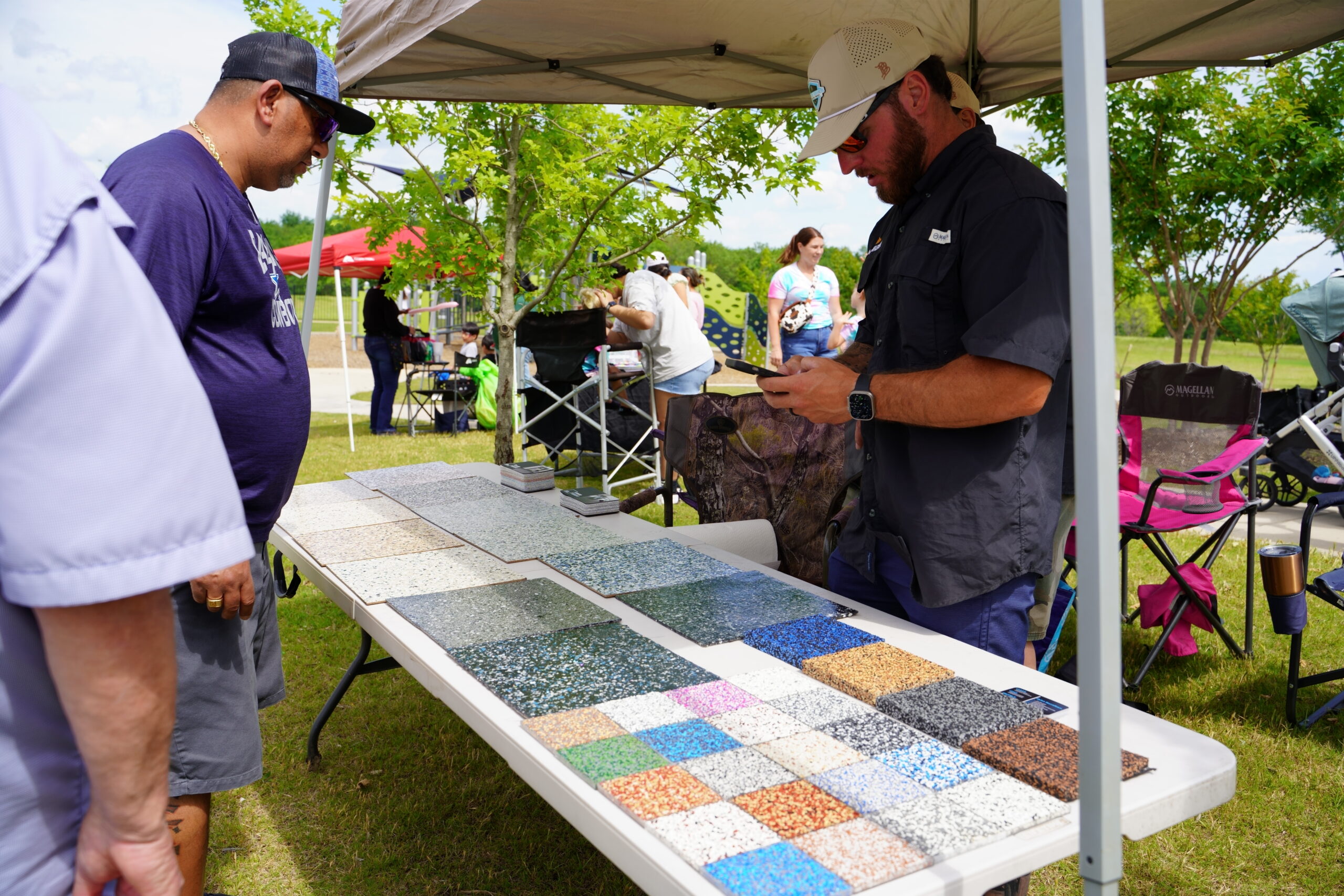
Flake coverage can vary depending on the desired look, ranging from partial coverage to full broadcast systems. Beyond appearance, flakes also add texture, helping reduce slip and hide minor imperfections in the slab.
Once cured, excess flakes are scraped and vacuumed, leaving a uniform surface ready for sealing.
Topcoat Seals and Protects the Floor
The final step is the topcoat.
This clear layer seals the system and provides resistance to hot tire pickup, chemicals, oil, and daily wear. It also determines the final sheen and feel of the floor.
A properly applied topcoat is what gives epoxy garage floors their durability and long-term performance. It protects everything underneath it.
Timeline and Cure Time Expectations
Most epoxy garage floors are installed in one to two days, depending on the size of the garage and the condition of the concrete.
Cure time varies based on temperature and humidity. While light foot traffic may be allowed within a day, full vehicle use typically requires additional curing time to ensure maximum strength.
Rushing this process can compromise the finish.
Why Experience Matters for Long-Lasting Results
Homeowners searching for Impress Flooring, Impress Luxury Floor Coatings, or Impress floors are not just looking for a good looking garage. They want confidence that the job is done right.
A durable epoxy floor requires experience, proper equipment, and attention to detail at every stage. When installed correctly, the result is a garage floor that is functional, safe, and visually clean for years to come.