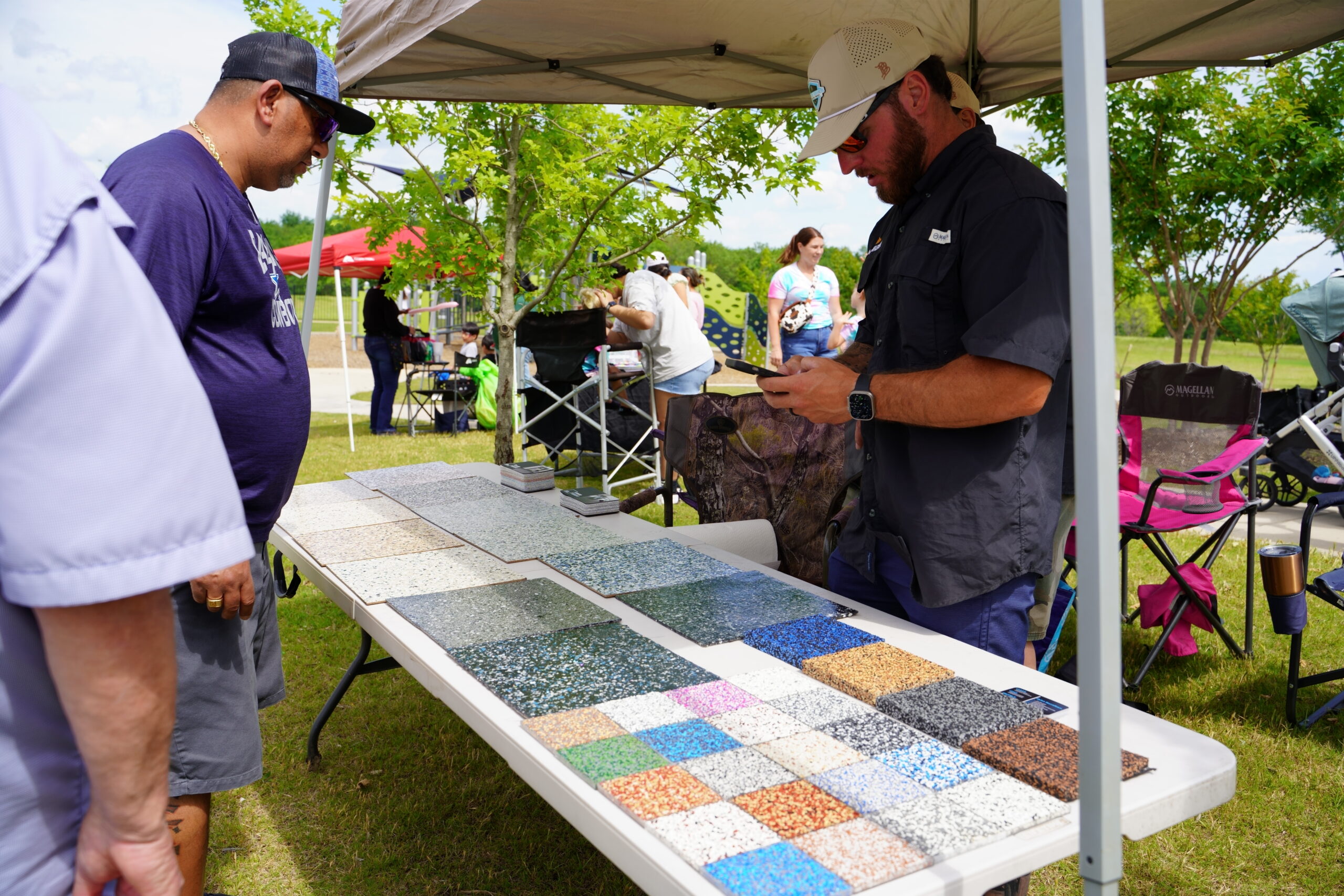
Why Flake Choice Impacts Your Epoxy Floor More Than You Think 🎨🔬
Decorative flake epoxy flooring is often chosen for its appearance, but flake is not just a color element. It is a functional component of the flooring system that affects texture, traction, coating behavior, and long-term performance.
Most homeowners are never shown how flake is made or why flake size, blend, and coverage level matter beyond aesthetics. This guide explains the manufacturing process and the real reasons flake selection impacts the overall experience of an epoxy floor installation.
What Epoxy Flake Is Actually Made Of
Decorative epoxy flake is a polymer-based material, typically vinyl or acrylic, engineered to be chemically compatible with epoxy resins and topcoats.
High-quality flake is manufactured by:
• Blending polymer resins with pigments
• Forming the material into thin cured sheets
• Mechanically breaking sheets into flakes
• Sorting flakes by size and thickness
Because pigment runs through the entire flake, not just the surface, color remains consistent even after years of wear.
Flake Size and Texture
Here’s Why Size Still Matters After Scraping and Topcoating
Even after flake is scraped flat and sealed with a topcoat, the micro-profile of the surface is not the same.
Larger flake:
• Creates deeper spacing between flakes
• Leaves more height variation after scraping
• Requires thicker topcoat coverage
Smaller flake:
• Packs tighter together
• Produces shallower valleys
• Results in a more uniform coating film
The topcoat follows the surface beneath it. It does not erase texture, it encapsulates it.
This difference influences how the floor feels underfoot and how it behaves when wet.
Wet Performance and Water Movement
Here’s Why Flake Affects Slip Resistance 💧
Slip resistance is not only about grit or additives. It’s about how water behaves on the surface.
Larger flake systems:
• Break surface tension faster
• Disrupt water film formation
• Allow moisture to spread instead of pooling
Smaller flake systems:
• Encourage water to sit as a continuous layer
• Rely more heavily on topcoat chemistry for traction
Even with a smooth topcoat, the underlying flake structure influences water displacement at a micro level.
Underfoot Feel
Here’s Why Two Sealed Flake Floors Feel Different
After topcoating, all flake floors feel smoother. But they don’t feel identical.
Larger flake:
• Feels slightly more textured
• Provides natural grip during movement
• Transitions better between wet and dry conditions
Smaller flake:
• Feels more polished
• More uniform and refined
• Depends more on additives for grip
This difference is subtle but noticeable, especially barefoot or in garages where water is present.
Topcoat Behavior
Here’s Why Flake Size Affects Durability
Topcoat thickness varies based on the surface below.
With larger flake:
• More material is required to encapsulate peaks
• Valleys receive thicker film build
• Texture is preserved within the system
With smaller flake:
• Less material is needed
• Film thickness is more consistent
• Wear occurs more evenly
Neither is wrong. They are simply different performance profiles.
Flake Coverage Levels
Full Broadcast vs Partial Broadcast
Flake systems are not all installed the same way.
Partial broadcast:
• More epoxy visible
• Smoother finish
• Less aggressive texture
Full broadcast:
• Complete flake coverage
• Increased durability
• Enhanced traction
Coverage choice impacts cost, texture, and maintenance expectations.
Flake Color Blends
Here’s Why Color Affects Maintenance 🎨
Flake blends are engineered for balance.
High-contrast blends:
• Hide dirt and tire marks
• Mask small imperfections
• Stay visually clean longer
Low-contrast blends:
• Look modern and clean
• Show debris more easily
• Require more frequent cleaning
Color isn’t just style. It affects how often your floor looks clean.
Why Professional Flake Selection Matters
Professionals don’t pick flake based on color charts alone.
They consider:
• Lighting conditions
• Foot and vehicle traffic
• Moisture exposure
• Desired texture
• Topcoat selection
Flake is part of the system, not decoration.
Final Thoughts
Flake Is Engineered Performance
Decorative flake plays a role in traction, water behavior, coating thickness, and wear patterns. Even after scraping and sealing, flake size and blend continue to influence how the floor performs.
Understanding this helps homeowners make better decisions and explains why professional epoxy installations feel different from cheap coatings.
Flake catches attention. Performance earns trust.