The Science, Chemistry, and Systems Behind a High-Performance Floor 🧪✨
Epoxy flooring is often talked about as a “coating,” but that description barely scratches the surface. A true epoxy floor is a chemical system, not paint, not sealant, and not a simple top layer. When installed correctly, epoxy flooring becomes a bonded extension of the concrete itself.
This guide breaks down how epoxy works, the chemistry behind it, the different epoxy systems available, and the environmental factors that affect performance. Whether you are a homeowner researching garage floors or someone curious about the science behind modern resin flooring, this post is designed to educate.
What Is Epoxy Flooring?
Epoxy flooring is a two-part thermosetting resin system made from:
• Epoxy resin
• A hardener (also called a curing agent)
When these two components are mixed, a chemical reaction begins that transforms the liquid material into a rigid, durable solid. Once cured, epoxy does not melt or soften again, even under high heat or heavy load.
This reaction is what separates epoxy from paints, acrylic coatings, or single-part sealers.
The Chemistry Behind Epoxy
What Happens When Epoxy Cures?
At the molecular level, epoxy curing is a process called polymerization.
Here’s what’s happening behind the scenes:
• Epoxy resin contains epoxide groups
• The hardener contains reactive amine groups
• When mixed, these molecules link together
• A cross-linked polymer network forms
This cross-linking is what gives epoxy its strength, chemical resistance, and adhesion. The more complete the reaction, the stronger and longer-lasting the floor.
Once cured, epoxy becomes:
• Extremely hard
• Chemically resistant
• Moisture resistant
• Mechanically bonded to concrete
This is why surface prep and correct mix ratios matter so much. If the chemistry is disrupted, the floor fails.
Why Epoxy Bonds to Concrete So Well
Concrete is porous. When properly prepared, epoxy doesn’t just sit on top of it, it penetrates the surface profile created during grinding.
Professional installers mechanically grind the slab to create what’s known as a Concrete Surface Profile (CSP). This opens the pores of the concrete, allowing epoxy to soak in and lock itself mechanically and chemically.
Without this step, epoxy has nothing to grip and failure is almost guaranteed.
Different Types of Epoxy Flooring Systems
Not all epoxy floors are the same. Different environments require different chemistries.
1. 100% Solids Epoxy
This is the highest quality epoxy available.
• No solvents
• No evaporation during curing
• Extremely thick and durable
• Long cure time
Best for:
• Garages
• Showrooms
• High-end residential spaces
This type creates the strongest bond but requires professional installation due to its viscosity and working time.
2. Water-Based Epoxy
Water is used as the carrier instead of solvents.
• Lower odor
• Thinner build
• Easier to apply
• Less durable than solids epoxy
Best for:
• Light-duty residential areas
• DIY applications
• Moisture-sensitive environments
3. Solvent-Based Epoxy
Contains solvents that evaporate during curing.
• Strong adhesion
• Thinner final coating
• Higher VOC content
Best for:
• Older slabs
• Industrial environments
• Situations requiring deep penetration
These systems must be installed with proper ventilation.
4. Polyaspartic and Polyurea Systems
Often used alongside epoxy rather than instead of it.
• Extremely fast curing
• UV stable
• High flexibility
Best for:
• One-day installs
• Exterior exposure
• Topcoats over epoxy base layers
Epoxy provides the bond. Polyaspartic provides the protection.
Why Moisture Matters So Much 💧
Moisture is epoxy’s silent enemy.
Concrete constantly releases moisture vapor. If vapor pressure exceeds the epoxy’s tolerance, it can cause:
• Bubbling
• Peeling
• Delamination
Professional installers test for moisture using calcium chloride or relative humidity testing. If moisture levels are high, a moisture mitigation epoxy primer is required before installing the floor.
Skipping this step is one of the most common causes of epoxy failure.
Environmental Factors That Affect Epoxy Performance
Epoxy chemistry is sensitive to its surroundings.
Key factors include:
• Temperature
• Humidity
• Slab age
• Contaminants like oil or curing compounds
Cold temperatures slow curing. High humidity can cause surface defects. Oil contamination can prevent bonding entirely.
This is why professional installations outperform DIY kits. The chemistry must be controlled.
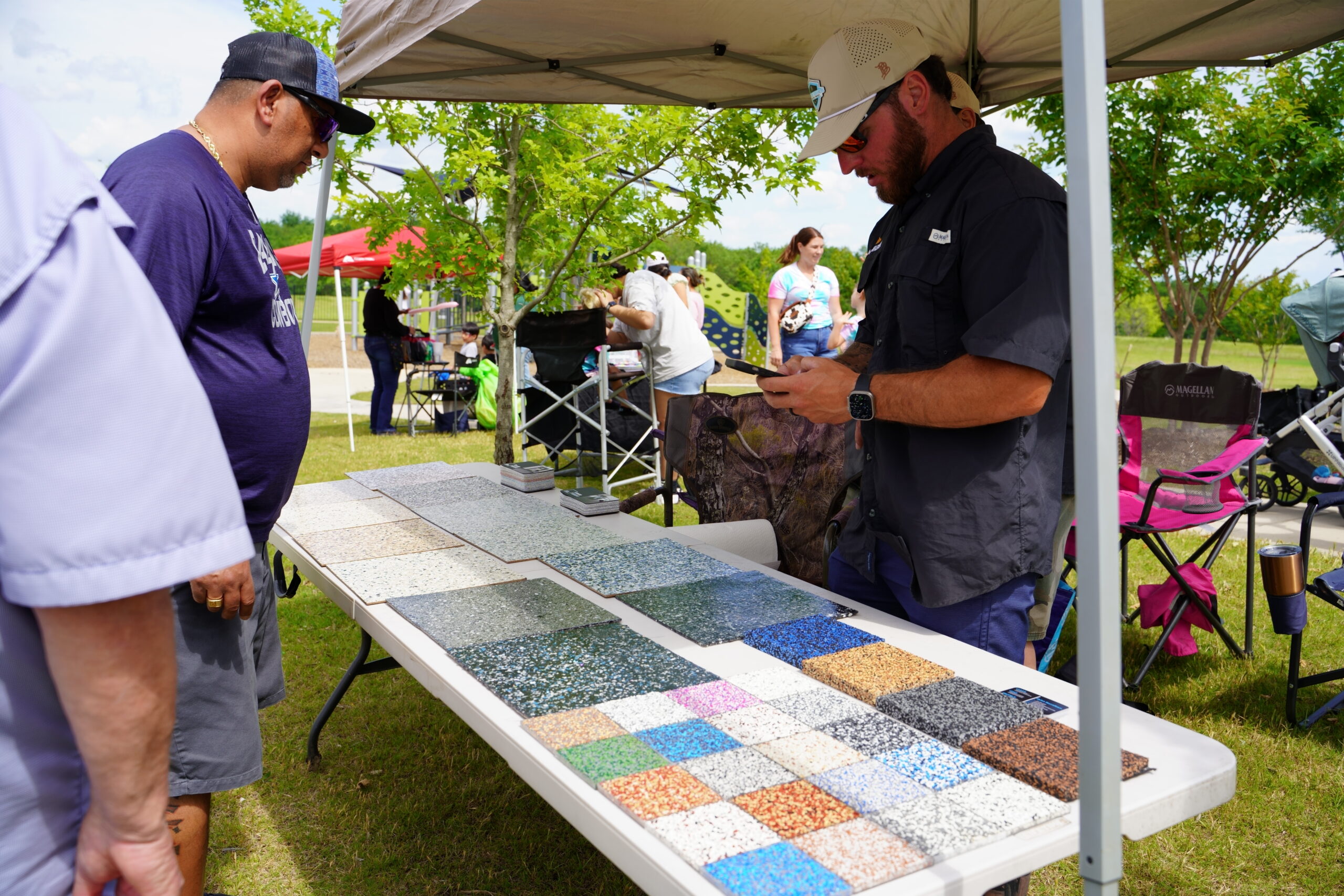
Decorative Additives and Their Purpose
Epoxy floors are not just functional. Decorative systems add both beauty and performance.
Vinyl Flake Systems
• Improve slip resistance
• Hide surface imperfections
• Add depth and texture
Metallic Pigments
• Create movement and depth
• Require advanced installation skill
• Best for controlled indoor environments
Decorative elements do not weaken epoxy when installed correctly. They enhance usability.
Why Epoxy Floors Last So Long
When properly installed, epoxy flooring can last 10 to 20 years or more.
Longevity comes from:
• Proper concrete preparation
• Correct epoxy chemistry
• Moisture testing
• Quality topcoats
Epoxy does not fail on its own. Failures come from shortcuts.
Final Thoughts
Epoxy Is Science, Not Paint 🧠
Understanding how epoxy works changes how you evaluate flooring options. Epoxy is a chemically engineered system designed to bond, cure, and protect under extreme conditions.
When installed correctly, epoxy flooring becomes one of the most durable and practical surfaces available for residential spaces.
Education matters. Chemistry matters. Preparation matters.
If you want a floor that lasts, the science cannot be ignored.